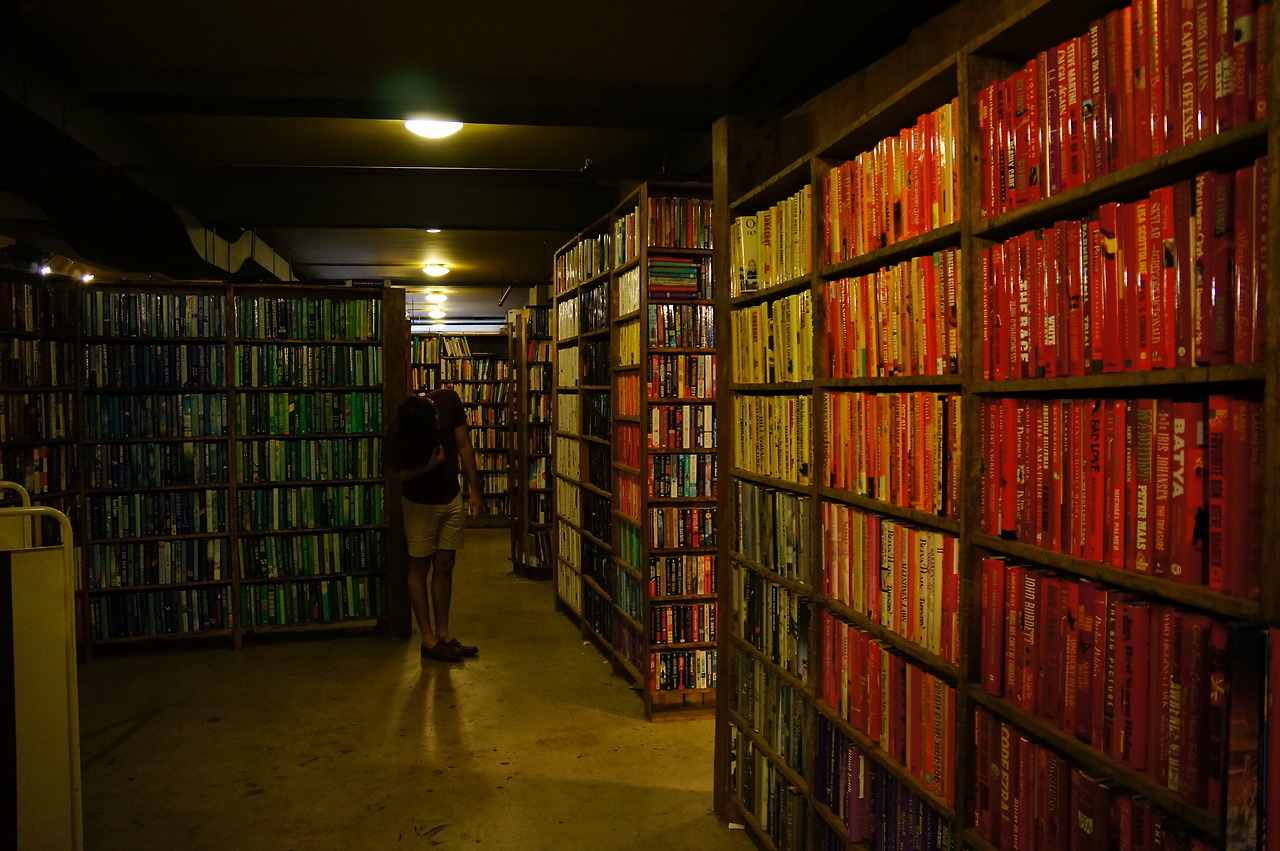
Buy the book? – Monocle Magazine

In Japan, a second library is set to open that is funded by private bookseller Tsutaya. Is this evidence of turning over a new leaf or should we throw the book at the commercialisation of a public service?


It’s been years since I was a heavy library user. Moving to Japan had something to do with that. I use the public libraries in Tokyo but not often; usually it’s just to borrow a book in Japanese on a work-related topic. And I never linger. Libraries here tend to be an uninviting place to read. Same cramped interior. Same utilitarian furniture. Same fluorescent lighting. To get my ink-on-paper fix, I prefer Tsutaya Books in Tokyo’s Daikanyama district. Few libraries can compete with the experience of a bookshop that’s so complete it offers hope for the future of bricks-and-mortar booksellers.

Which brings me to a story in the Japanese media last week about library makeovers. Specifically, Tagajo: a city in Miyagi prefecture, north of Tokyo, that has signed an agreement with Tsutaya’s parent company to build what the two sides are calling a “centre of cultural exchange”. Their plans call for a space that’s a public library, bookshop, café and restaurant all rolled into one seamless package. Tsutaya’s involvement makes it likely that Tagajo’s library will have all the trappings of, well, a Tsutaya bookshop.

This will be the second time a city has tapped Tsutaya to run a library. The first – in Takeo city, in the southern prefecture of Saga – opened in April, to mostly enthusiastic reviews. Anyone who has browsed the cosy aisles at Tsutaya Books in Daikanyama will immediately spot the design similarities. Hanging and standing lamps and bookshelves with recessed lighting complement the daylight that pours in from the skylight and large ground-floor windows – and not a naked fluorescent bulb in sight. Freestanding shelves on the ground floor and floor-to-ceiling shelves in an upstairs loft hold 200,000 books and reference materials. Amid the stacks there are plenty of wooden tables where you can park yourself with a book for hours. Tsutaya also train the staff and provide the black-and-white uniforms that make them easy to pick out in a crowd.

Continue reading “Buy the book? – Monocle Magazine”

Excerpt from The Illustrated Man – Ray Bradbury

I was never young. Whoever I was then is dead. I’ve always figured it that you die each day and each day is a box, you see, all numbered and neat; but never go back and lift the lids, because you’ve died a couple of thousand times in your life, and that’s a lot of corpses, each dead in a different way, each with a worse expression. Each of those days is a different you, somebody you don’t know or understand or want to understand.

No Particular Night or Morning

Excerpt from Taoism: The Way of the Tao

Detach from Learning and You Have No Worries

Detach from learning and you have no worries.
How far apart are yes and yeah?
How far apart are good and bad?
The things people fear cannot but be feared.
Wild indeed the uncentered!
Most people celebrate
as if they were barbecueing a slaughtered cow,
or taking in the springtime vistas;
I alone am aloof,
showing no sign,
like an infant that doesn’t yet smile,
riding buoyantly
as if with nowhere to go.

Drunken Library’s Album of the Month – May 2015

Drunken Library’s Album of the Month

It is with great pleasure that we announce this month’s featured album to blast as Strangers by RAC.

RACStrangers-album

Technically known as Remix Artist Collective, this is the solo-project of a man named André Allen Anjos, originally from Portugal. He works diligently to reinvent artists’ songs for a distinct and fresh sound. He has done a number of quality remixes in his lengthy career with production, sound engineering and the music business. Strangers, however, is the his first full-length album – a product of collaborative genius.

racAndre-Anjos-RAC

It is perfect timing that this release came in the spring, just as we are itching our legs to stretch, move and dance again as the sun comes out from it’s winter barracks. Featuring artists like Tegan & Sara, Penguin Prison, Tokyo Police Club, Alex Ebert, Karl Kling, Kele & MNDR, the whole album is rich with fresh voices and packed with dance pop.

Have a quick listen . . .

You just have to buy it. Really.

With lyrics like “we all know you’re made of plastic, you might seem like something classic, but your cheap sunglasses. . . I see right through you,” it has a flair of punk within it’s groovy boogie summer feel.

Our favorite single . . .

This artist is definitely one to notice, given that his work has permeated the airstreams under the radar for so long. Now do him justice by jamming to each track for the rest of May and see how much more joy you’ll have.

Excerpt from To a God Unknown – John Steinbeck

Joseph’s horse raised its head and sniffed the air. On top of the ridge stood a clump of giant madrone trees, and Joseph saw with wonder how nearly they resembled meat and muscles. They thrust up muscular limbs as red as flayed flesh and twisted like bodies on the rack. Joseph laid his hand on one of the branches as he rode by, and it was cold and sleek and hard. But the leaves at the ends of the horrible limbs were bright green and shiny. Pitiless and terrible trees, the madrones. They cried with pain when burned.

Joseph gained the ridge-top and looked down on the grass lands of his new homestead where the wild oats moved in silver waves under a little wind, where the patches of blue lupins lay like shadows in a clear lucent night, and the poppies on the side hills were broad rays of sun. He drew up to look at the long grassy meadows in which clumps of live oaks stood like perpetual senates ruling over the land. The river with its mask of trees cut a twisting path down through the valley. Two miles away he could see, beside a gigantic lonely oak, the white speck of his tent pitched and left while he went to record his homestead. A long time he sat there. As he looked into the valley, Joseph felt his body flushing with a hot fluid of love. “This is mine,” he said simply, and his eyes sparkled with tears and his brain was filled with wonder that this should be his. There was pity in him for the grass and the flowers; he felt that the trees were his children and the land his child. For a moment he seemed to float high in the air and to look down upon it. “It’s mine,” he said again, “and I must take care of it.”

“Because I could not stop for Death” – Emily Dicksinson

Because I could not stop for Death –
He kindly stopped for me –
The Carriage held but just Ourselves –
And Immortality.

We slowly drove – He knew no haste
And I had put away
My labor and my leisure too,
For His Civility –

We passed the School, where Children strove
At Recess – in the Ring –
We passed the Fields of Gazing Grain –
We passed the Setting Sun –

Or rather – He passed Us –
The Dews drew quivering and Chill –
For only Gossamer, my Gown –
My Tippet – only Tulle –

We paused before a House that seemed
A Swelling of the Ground –
The Roof was scarcely visible –
The Cornice – in the Ground –

Since then – ’tis Centuries – and yet
Feels shorter than the Day
I first surmised the Horses’ Heads
Were toward Eternity –

Drunken Library’s Weekend Playlist – April Music

Reflections – Misterwives

Hollywood – RAC

Kanye – The Chainsmokers

Oh Sailor – Mr. Little Jeans

Good 4 It – Wallpaper


– REPEAT –

How Libraries Are Transforming Into Community Anchors

This year, as we celebrate National Library Week, April 12 – 18, it is important to realize that libraries not only engage, but also transform their communities, especially during times of emergency, when libraries are often the glue that holds communities together.

A dramatic illustration of this was displayed in Ferguson, Missouri during August and November 2014, following the announcement of a Grand Jury’s decision not to indict police officer Darren Wilson in the shooting death of Michael Brown.

When local schools were closed, the library became an “ad hoc school on the fly” where students were taught by “working and retired teachers” and other volunteers. The library remained open and provided space for teachers to hold classes. Library staff went even further by creating special programming and educational experiences for the students. It also supported its community by hosting the U.S. Small Business Administration so it could provide emergency loans, the office of the U.S. Secretary of State to provide document recovery and preservation services and the Missouri Department of Insurance to help local businesses file for insurance and claims.

In addition, the library staff supported the children of Ferguson by circulating “healing kits,” which included books, stuffed animals and activities to help them cope with the unrest in their community.

Contrary to the narrow, old-fashioned view that pigeonholes them as places to check out books, libraries often fill the gap when other community agencies break down.

After Hurricane Sandy, libraries in Connecticut and New Jersey welcomed residents without power and provided emergency services ranging from daytime shelter to providing a space for filing insurance claims. The library provided a place where people could share experiences with others affected by the hurricane.
Continue reading “How Libraries Are Transforming Into Community Anchors”

Bette Davis Said

“The weak are the most treacherous of us all. They come to the strong and drain them. They are bottomless. They are insatiable. They are always parched and always bitter. They are everyone’s concern and like vampires they suck our life’s blood.”