“October” (5) – Louise Glück

5.

It is true that there is not enough beauty in the world.
It is also true that I am not competent to restore it.
Neither is there candor, and here I may be of some use.

I am
at work, though I am silent.

The bland

misery of the world
bounds us on either side, an alley

lined with trees; we are

companions here, not speaking,
each with his own thoughts;

behind the trees, iron
gates of the private houses,
the shuttered rooms

somehow deserted, abandoned,

as though it were the artist’s
duty to create
hope, but out of what? what?

the word itself
false, a device to refute
perception–At the intersection,

ornamental lights of the season.

I was young here. Riding
the subway with my small book
as though to defend myself against

the same world:
you are not alone,
the poem said,
in the dark tunnel.
“October” (4) – Louise Glück

4.

The light has changed;
middle C is tuned darker now.
And the songs of morning sound over-rehearsed.

This is the light of autumn, not the light of spring.
The light of autumn: you will not be spared

The songs have changed; the unspeakable
has entered them.

This is the light of autumn, not the light that says
I am reborn.

Not the spring dawn: I strained, I suffered, I was
delivered
.
This is the present, an allegory of waste.

So much has changed. And still, you are
fortunate:
the ideal burns in you like a fever.
Or not like a fever, like a second heart.

The songs have changed, but really they are still
quite beautiful.
They have been concentrated in a smaller space,
the space of the mind.
They are dark, now, with desolation and anguish.

And yet the notes recur. They hover oddly
in anticipation of silence.
The ear gets used to them.
The eyes gets used to disappearances.

You will not be spared, nor will what you love be
spared.

A wind has come and gone, taking apart the mind;
it has left in its wake a strange lucidity.

How privileged you are, to be passionately
clinging to what you love;
the forfeit of hope has not destroyed you.

Maestro, doloroso:

This is the light of autumn; it has turned on us.
Surely it is a privilege to approach the end
still believing in something.

Excerpt from Mrs. Dalloway – Virginia Woolf

Quiet descended on her, calm, content, as her needle, drawing the silk smoothly to its gentle pause, collected the green folds together and attached them, very lightly, to the belt. So on a summer’s day waves collect, overbalance, and fall; collect and fall; and the whole world seems to be saying “that is all” more and more ponderously, until even the heart in the body which lies in the sun on the beach says too, That is all. Fear no more, says the heart. Fear no more, says the heart, committing its burden to some sea, which sighs collectively for all sorrows, and renews, begins, collects, lets fall. And the body alone listens to the passing bee; the wave breaking; the dog barking, far away barking and barking.

“October” (2) – Louise Glück

2.

Summer after summer has ended,
balm after violence:
it does me no good
to be good to me now;
violence has changed me.

Daybreak. The low hills shine
ochre and fire, even the fields shine.
I know what I see; sun that could be
the August sun, returning
everything that was taken away —

You hear this voice? This is my mind’s voice;
you can’t touch my body now.
It has changed once, it has hardened,
don’t ask it to respond again.

A day like a day in summer.
Exceptionally still. The long shadows of the
maples
nearly mauve on the gravel paths.
And in the evening, warmth. Night like a night in
summer.

It does me no good; violence has changed me.
My body has grown cold like the stripped fields;
now there is only my mind, cautious and wary,
with the sense it is being tested.

Once more, the sun rises as it rose in summer;
bounty, balm after violence.
Balm after the leaves have changed, after the
fields
have been harvested and turned.

Tell me this is the future,
I won’t believe you.
Tell me I’m living,
I won’t believe you.


[Excerpted from Averno]

“October” (1) – Louise Glück

1.

Is it winter again, is it cold again,
didn’t Frank just slip on the ice,
didn’t he heal, weren’t the spring seeds planted

didn’t the night end,
didn’t the melting ice
flood the narrow gutters

wasn’t my body
rescued, wasn’t it safe

didn’t the scar form, invisible
above the injury

terror and cold,
didn’t they just end, wasn’t the back garden
harrowed and planted–

I remember how the earth felt, red and dense,
in stiff rows, weren’t the seeds planted,
didn’t vines climb the south wall

I can’t hear your voice
for the wind’s cries, whistling over the bare ground

I no longer care
what sound it makes

when I was silenced, when did it first seem
pointless to describe that sound

what it sounds like can’t change what it is–

didn’t the night end, wasn’t the earth
safe when it was planted

didn’t we plant the seeds,
weren’t we necessary to the earth,

the vines, were they harvested?


[Excerpted from Averno]

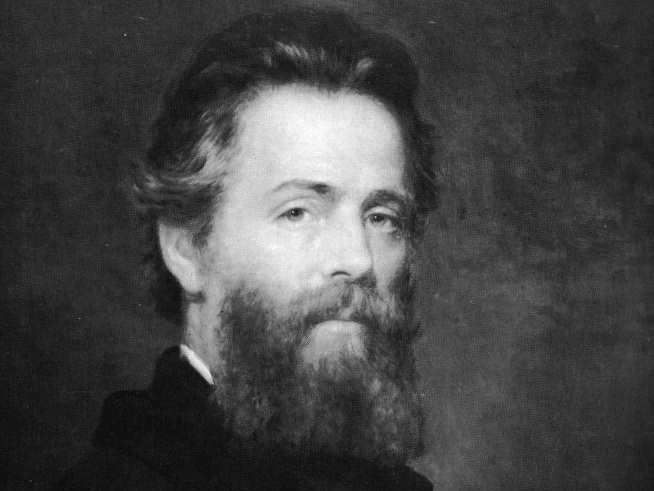
Death Day – A Tribute to Herman Melville

Herman-Melville

Celebrating the life of Herman Melville

Born a New Yorker in 1819 on August 1st, Herman Melville lived to the age of 72, until passing away on September 28, 1981. He spent most of his younger years working diligently to alleviate the debt that riddled his family, eventually finding himself aboard a merchant ship as a cabin boy. His life continued to be filled with sailing adventures, voyages to the South Seas and encounters with the present-day French Polynesian islands inhabited with cannibalistic civilizations. His writings were inspired mostly from his journeys, but were driven by a critical philosophy of American culture and society.

Herman Melville

I recommend all adventurous youths who abandon vessels in romantic islands during the rainy season to provide themselves with umbrellas.

Melville wed Elizabeth Shaw in 1847, continuing on to have two sons and two daughters. He had a brief but pivotal friendship with American writer, Nathaniel Hawthorne, and continued to publish short stories and novels throughout his life. In his later years, he worked as a customs guard on the ship harbors, writing as a habit on nights, and weekends, exploring the world of poetry too, up until the final moments of his life.

Favorite quotes:

“It is not down in any map; true places never are.”

“Nature is nobody’s ally.”

“Thou wine art the friend of the friendless, though a foe to all.”

Incomplete list of suggested reading:

  • Typee (1846)
  • Omoo (1847)
  • Redburn (1849)
  • White-Jacket (1850)
  • Moby Dick (1851)
  • Pierre (1852)
  • “Bartleby the Scrivener” (1853)
  • The Encantadas” (1854)
  • “Benito Cereno” (1855)
  • Israel Potter: His Fifty Years of Exile (1855)
  • The Confidence-Man (1857)

melville-1

Interesting fact:

Melville’s New York publisher’s house underwent a devastating fire in 1853 that destroyed most of his books.

Share a quote or excerpt of Herman Melville today in the comments or with your online community using the tag #HappyDeathDayMelville 

“The Summer Day” – Mary Oliver

Who made the world?
Who made the swan, and the black bear?
Who made the grasshopper, I mean-
the one who has flung herself out of the grass,
the one who is eating sugar out of my hand,
who is moving her jaws back and forth instead of up and down-
who is gazing around with her enormous and complicated eyes.
Now she lifts her pale forearms and thoroughly washes her face.
Now she snaps her wings open, and floats away.
I don’t know exactly what a prayer is.
I do know how to pay attention, how to fall down
into the grass, how to kneel down in the grass,
how to be idle and blessed, how to stroll through the fields,
which is what I have been doing all day.
Tell me, what else should I have done?
Doesn’t everything die at last, and too soon?
Tell me, what is it you plan to do
with your one wild and precious life?

A Poem from “A Season in Hell” – Arthur Rimbaud

It is recovered!
What? Eternity.
It is the sea
Mixed with the sun.

My soul eternal,
Redeem your promise,
In spite of the night alone
And the day on fire.

Of human suffrage,
Of common aspirings,
You free yourself then!
You fly according to. . .

Hope never more,
No orietur.
Science and patience,
Retribution is sure.

No more tomorrows,
Embers of satin,
Your ardor is now
Your duty only.

It is recovered!
What? Eternity.
It is the sea
Mixed with the sun.

“The Snakes of September” – Stanley Kunitz

All summer I heard them
rustling in the shrubbery,
outracing me from tier
to tier in my garden,
a whisper among the viburnums,
a signal flashed from the hedgerow,
a shadow pulsing
in the barberry thicket.
Now that the nights are chill
and the annuals spent,
I should have thought them gone,
in a torpor of blood
slipped to the nether world
before the sickle frost.
Not so. In the deceptive balm
of noon, as if defiant of the curse
that spoiled another garden,
these two appear on show
through a narrow slit
in the dense green brocade
of a north-country spruce,
dangling head-down, entwined
in a brazen love-knot.
I put out my hand and stroke
the fine, dry grit of their skins.
After all,
we are partners in this land,
co-signers of a covenant.
At my touch the wild
braid of creation
trembles.

What Bradbury Said about Libraries

“I don’t believe in colleges and universities. I believe in libraries because most students don’t have any money. When I graduated from high school, it was during the Depression and we had no money. I couldn’t go to college, so I went to the library three days a week for 10 years… At the end of 10 years, I had read every book in the library and I’d written a thousand stories.”